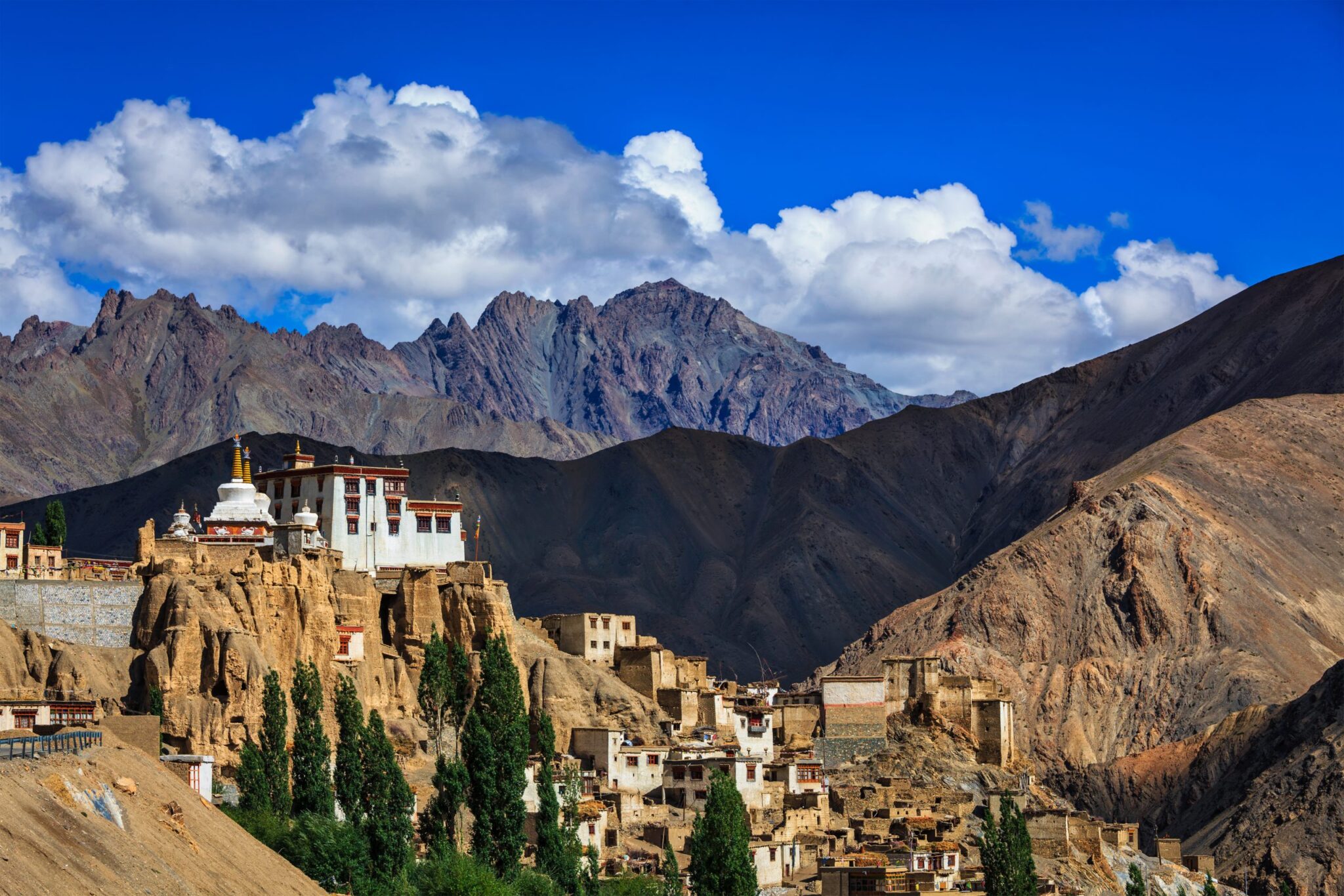
You cannot travel Tibet independently. A foreign visitor needs a Tibet Travel Permit in addition to a Chinese visa, that permit is issued only against a booked itinerary through a locally licensed operator, and a guide and a private vehicle travel with you throughout. There is no version of this where you land in Lhasa and work it out.
And Lhasa is at about 11,995 feet (3,656 m). That number is not an interesting statistic, it is the schedule. It is why our routes begin with two days of doing very little, why the passes come on day four rather than day two, and why we will decline to build a trip that ignores it.
What follows is the document our consultants open when a Tibet file lands on the desk: how the permits work, what altitude does and when to descend, what the accommodation is genuinely like outside Lhasa, what it costs and why it cannot be cheap, and when we will tell you no.
Tibet at a glance
| Best months | May, June, September and October |
| Comfortable trip length | 8 to 10 days, of which two are acclimatisation |
| Entry | Chinese visa plus a Tibet Travel Permit, with further permits beyond Lhasa |
| Getting there | Flight or the Qinghai-Tibet railway from mainland China, or from Kathmandu |
| Getting around | Private vehicle and a licensed Tibetan guide, mandatory throughout |
| Land budget, per person per day | 210 to 560 US dollars |
| Our presence | A long-standing licensed partner in Lhasa. We have dedicated local offices in Vietnam and India, our team in Japan, and local representatives in the Philippines |
The permit reality
This is the part that surprises people, so it is worth setting out in order.
The Chinese visa comes first. Tibet is part of the People’s Republic of China and you enter the country on a Chinese visa like any other visitor. The exception is entering overland or by air from Kathmandu, which is covered below and works differently.
The Tibet Travel Permit comes second. It is applied for by a licensed operator, using scans of your passport and Chinese visa, against a fixed day-by-day itinerary with named accommodation and a named guide, and it typically needs several weeks of lead time. The permit, or an accepted copy, has to be in your hands before you check in for the flight or board the train into Lhasa, because the airline and the railway will check it. Getting that paper to you in time is one of the real jobs of an operator here.
Further permits come third. Anything beyond Lhasa prefecture needs an additional travel permit, and the border areas, which include the Everest region, need a border permit as well. These are arranged in Lhasa by your guide against the itinerary already filed, which is why a route cannot be casually changed on the day: the paperwork is specific to the road you said you were taking.
The guide and vehicle are not optional. A licensed Tibetan guide accompanies you and a driver with a permitted vehicle carries you. Checkpoints on the road out of Lhasa check the permits, the passenger list and the vehicle. There is no arrangement where you drive yourself.
Entering from Nepal is a different process. Travellers coming from Kathmandu do not use an ordinary Chinese visa. A Chinese group visa is issued in Kathmandu against the booked itinerary, and it takes precedence over any Chinese visa already in your passport, which is a genuine trap for people combining Tibet with a longer China trip. If your route involves Nepal in either direction, tell us at the first email.
We confirm the current requirement for your passport and your exact dates in writing before you book, and again before you fly, rather than quoting a rule from memory.
When Tibet closes, said plainly
The region is periodically closed to foreign visitors. Permits stop being issued, existing permits can be affected, and the closure is typically announced at short notice and lasts for a period of days or weeks. In most recent years this has included a stretch in and around March.
We handle it in three ways. We are cautious about confirming departures in the windows historically affected. We monitor the position through our Lhasa partner, who knows before any published source does. And if your dates are closed we tell you as soon as we know, move you or refund the land arrangements, and do not put you on an aircraft hoping it resolves in the air.
This is the most common reason we say no to a Tibet enquiry, and we would rather say it at the enquiry stage than at the airport.
Altitude, and when to go down
Lhasa is at about 11,995 feet (3,656 m). A classic route crosses passes at around 15,700 feet (4,790 m) and 16,400 feet (5,000 m), and the Everest road tops out above 17,000 feet (5,200 m). Almost nobody arrives adapted to this.
What is normal
In the first 24 to 48 hours in Lhasa, most people experience some of the following: headache, poor sleep, waking short of breath, loss of appetite, mild nausea, and finding a flight of stairs harder than it should be. This is acute mountain sickness in its ordinary form. It is unpleasant, it is common, and it resolves as you adapt.
The management is simple and boring. Do very little for two days. Drink far more water than feels necessary. No alcohol. Eat, even without appetite. Walk slowly, and mean slowly. If you have a headache, take a simple painkiller and rest.
What is not normal
Three things change the situation completely and require descent rather than rest:
- Confusion, unusual behaviour, or an unsteady, stumbling walk. This suggests high altitude cerebral oedema.
- Breathlessness while sitting still, a persistent wet cough, or a blue tinge to the lips. This suggests high altitude pulmonary oedema.
- Symptoms that get worse rather than better with rest, or any symptom you cannot explain.
The response to all three is the same: go down, immediately, at any hour. Do not ascend further, do not wait until morning, and do not push on because the itinerary says Everest tomorrow. Losing altitude is the treatment, and every one of our routes carries a written descent plan for every night, with the road distance and time to a lower elevation.
What we build in
Two full days in Lhasa before you cross a pass, and we do not remove them on request. Bottled oxygen in every vehicle, with the guide trained in when to use it and when it is a substitute for descending, which it is not. A guide instructed to overrule the itinerary if a traveller is unwell, without needing to call anyone for permission. And a rule that we do not compress a Tibet route to fit a shorter holiday, because the days we would remove are the ones keeping you safe.
Some travellers take a prescription medicine to assist acclimatisation. That is a conversation with your own doctor rather than with us. If you have significant heart or lung conditions, or you are pregnant, ask your doctor about Tibet specifically and tell us what they say. There are medical facilities in Lhasa and considerably less on the road, and serious cases are evacuated to Chengdu.
When to travel
May, June, September and October are the months we recommend. Clear, dry, and comfortable by day. September and October give the most reliable visibility toward Everest, which matters enormously if that is why you are going.
July and August carry most of the year’s rain. In Lhasa it tends to fall at night and the days are often fine, but the cloud sits on the high peaks and the mountain roads become less predictable. It is the greenest the plateau gets. If Everest is the point of your trip, this is not your window.
April and early November are shoulder months: colder, quieter, cheaper and still workable, with a real chance of snow closing a high pass.
December to February is cold at night, often below freezing, while Lhasa by day is sunny, dry and very quiet. Some travellers love it. Access to the Everest area and the northern lakes is unreliable and permits are more often restricted.
How many days
- Six days. Lhasa only. Two acclimatisation days and two of sightseeing. It works and it is the minimum we will build.
- Eight days. Our standard first trip. Lhasa, Yamdrok Lake, Gyantse and Shigatse. See Classic Tibet in 8 days.
- Ten days. The above plus the overland road to Everest north base camp. See Everest north base camp in 10 days.
- Fourteen days. Everest and Namtso and the Yarlung valley, at a pace that includes rest days rather than only driving days.
- Twenty-one days. Overland to Kathmandu, or Tibet combined with Nepal. See Tibet overland to Kathmandu in 21 days.
Getting there, and getting around
By air. Flights into Lhasa from Chengdu take a little over two hours and are the most common approach, with services also from Xining, Xi’an, Chongqing, Beijing, Shanghai and Kathmandu. Fast, and it puts you at almost 12,000 feet (3,660 m) in a morning, which is exactly why the first two days are what they are.
By rail. The Qinghai-Tibet railway from Xining takes around 21 hours and crosses the Tanggula Pass at roughly 16,640 feet (5,072 m), the highest point on any railway in the world. Carriages carry supplementary oxygen. The gradual ascent helps a little and it is a memorable journey across the plateau. It does not replace the acclimatisation days.
On the ground. A private vehicle with a driver and your licensed guide, throughout. Driving days on the plateau are long: Lhasa to Shigatse by way of Yamdrok Lake is six to eight hours, Shigatse to the Everest road is seven to nine. The roads themselves are largely surfaced and in good condition. The length comes from the distances, the passes and the checkpoints, and we build the day around a small number of stops rather than a long list.
What a trip to Tibet costs
Land only, per person, based on two people sharing, excluding international flights and the flight or train into Lhasa.
| Style | Per day | 8 days | 10 days | 14 days |
|---|---|---|---|---|
| Comfortable: good Lhasa hotels, simple on the road | $210 | $1,680 | $2,100 | $2,940 |
| Boutique: the best rooms in Lhasa, best available elsewhere | $330 | $2,640 | $3,300 | $4,620 |
| Luxury: top-tier where it exists, private throughout | $560 | $4,480 | $5,600 | $7,840 |
There is no budget tier on this page and that is deliberate. The permit process, the mandatory licensed guide and the mandatory private vehicle are fixed costs that apply from the first day whether you are two people or six, and they do not scale down. A cheap Tibet trip is not a thing that exists, and anyone quoting one is either running a large group bus or cutting something that should not be cut.
What does move the price: the number of travellers sharing the vehicle and the guide, the season, and how far beyond Lhasa you go, since the Everest road adds permits, distance and nights in places with almost no supply.
Accommodation, honestly
Lhasa has genuinely good hotels, including restored Tibetan courtyard houses in the old town and international-standard properties with proper heating, hot water and, in some cases, oxygen-enriched rooms. This is the comfortable part of the trip.
Gyantse and Shigatse have clean, plain three and four star hotels. Adequate, unremarkable, warm.
The Everest road is where it stops. Accommodation at Rongbuk and in the base camp area is a guesthouse or a tented camp: basic or shared rooms, thin bedding, no heating beyond a stove, no reliable hot water and pit toilets. At around 16,500 feet (5,000 m) in the cold, it is the least comfortable night most travellers will ever spend, and also the one they talk about afterwards. If that is not acceptable we will build a route that stops at Shigatse instead.
Eating in Tibet
The honest position: food is not a reason to come to Tibet, and we would rather say so than write a paragraph pretending otherwise.
The Tibetan repertoire is narrow and suited to the climate that produced it: tsampa, roasted barley flour; momos, steamed or fried dumplings; thukpa, a noodle soup; yak meat, dried or stewed; and butter tea, which is salty, which almost nobody likes at first and which does help at altitude. It is honest, warming food and there is not a great deal of variety in it.
Lhasa is different, with good Sichuan restaurants, Nepali and north Indian places, and a handful of restaurants doing Tibetan cooking well for visitors. On the road the choice narrows sharply, and near Everest it is whatever the guesthouse kitchen has.
Vegetarian is workable in Lhasa and constrained outside it. Tell us early and we brief every stop in advance.
Payments, phones and practical notes
- Your phone. Tibet is inside mainland China and the same restrictions apply, including to WhatsApp. We set up and test a VPN on your phone before you leave home, so your usual apps work normally. Your travel group runs on WhatsApp exactly as it does everywhere else, and we open a WeChat group alongside as a local fallback. Outside Lhasa the constraint is often signal rather than the firewall, and we tell you which nights those are.
- Payments. As elsewhere in China, Alipay or WeChat Pay with an international card linked, set up at home before you fly. Foreign cards work in the better Lhasa hotels and often nowhere else. Carry cash for the road.
- Sun. Ultraviolet at this altitude is severe and the air is thin and dry. High-factor sunscreen, lip balm, a hat and proper sunglasses are not optional, and the sunburn people get here surprises them.
- Layers. A 40F (22C) swing between midday sun and night is normal. Bring layers rather than one heavy coat, including a warm hat and gloves even in June.
- Photography. Do not photograph checkpoints, military installations or personnel. Many monastery chapels either charge a fee for photography or forbid it. Drones are not permitted. Your guide will tell you where the lines are and it is worth listening.
- Behaviour at monasteries. Walk clockwise around shrines and pilgrimage circuits, do not point your feet at an altar, and ask before photographing people.
How we build a Tibet trip
Every Tibet itinerary we write is put together by Asaf Zamshtein, who runs our China desk, with your named Tibet specialist here and our licensed Lhasa partner, whose Tibetan guides and drivers are the people you actually travel with. We have dedicated local offices in Vietnam and India, our team in Japan, and local representatives in the Philippines. Tibet is not one of them and could not be, because only a locally licensed operator can hold the permits, and we would rather say that plainly than imply an office we do not have.
The first draft is free and carries no obligation. It shows the actual hotels, the actual driving times, the elevation of every night you sleep, and the descent plan for each of them. Two rounds of changes are included, with one exception: we will not remove the acclimatisation days.
Ready to plan it?
Tell us your dates and we will confirm whether they are workable, then build you a first outline. A plan written for you, and a free, no-obligation quote if you want us to book.
Keep reading
- The eight Tibet itineraries we build most often
- Classic Tibet in 8 days
- Everest north base camp in 10 days
- China: the complete guide