Bhutan is a small Himalayan country that sits between about 4,300 feet (1,310 m) in the warm river valleys and well over 10,000 feet (3,000 m) on the passes you drive across to reach them. That range means the answer to “what will the weather be like” depends as much on which valley you are standing in as on which month it is.
The year at a glance
| Month | Weather in the western valleys | Mountain views | What it is good for |
|---|---|---|---|
| January | Cold and dry. Nights below freezing higher up | Excellent | Clear air, low rates, very few visitors |
| February | Cold, brightening. Punakha pleasant by afternoon | Excellent | Quiet, clear, cheap by Bhutanese standards |
| March | Warming fast. Rhododendron starting on the passes | Good | Spring flowers, the Paro festival in some years |
| April | Mild days, cold mornings | Fading to haze | Jacaranda in Punakha, the busiest festival month |
| May | Warm, humid by late month, first pre-monsoon showers | Poor | Rhododendron at altitude, green valleys |
| June | Monsoon arriving. Rain most afternoons | Gone | Bumthang festivals, mushrooms, low rates |
| July | Wet. Landslide risk on the east to west road | Gone | Very little, honestly |
| August | Wet, warm, leeches on the trails | Gone | Very little, honestly |
| September | Clearing through the month | Returning late in the month | The shoulder that improves daily |
| October | Dry, mild, clear | The best of the year | Everything. Our own preference |
| November | Dry, colder. Cranes in Phobjikha | Excellent | Cranes, clear passes, the crane festival |
| December | Cold and dry. Passes can take brief snow | Excellent | Clarity, quiet, lower rates |
Spring, March to May
The most popular window, and the one people picture. Days in the western valleys run roughly 60 to 72 Fahrenheit (16 to 22 C) with cold mornings. Rhododendron comes up the passes from late March, and the jacaranda along the walls of Punakha Dzong is at its best in April and May.
Spring is also the busiest festival period, which is a large part of why it is the busiest season generally.
The cost of spring is haze. By late April the Himalayan views from Dochula at 10,170 feet (3,100 m) and Chele La at 12,400 feet (3,780 m) are frequently gone by mid-morning. If the mountains are the reason you are coming, spring is the wrong half of the year and we will say so.
May is the month people underestimate in both directions. The valleys are green, the flowers at altitude are at their peak, and the first pre-monsoon showers arrive late in the month. It is a good month with a caveat rather than a bad one.
Summer monsoon, June to August
We do not recommend it, and we will tell you so before you ask twice.
Rain falls most afternoons, cloud sits on the passes for days, landslides close the east to west road for hours at a time, leeches appear on the walking trails, and the Himalaya is simply not visible. Hotel rates fall. The Sustainable Development Fee does not, which is what makes a monsoon Bhutan trip poor value rather than a bargain. The arithmetic is in what a trip to Bhutan really costs.
There are two honest exceptions. Bumthang in late June holds the Nimalung and Kurjey festivals, which are far less visited than the western ones. And the mushroom season is a genuine local pleasure that nobody travels for and everybody who is there enjoys.
If your dates are fixed to summer, tell us and we will build something honest for the valleys rather than pretend the passes will be clear. Our wider piece on the Asian monsoon explains what the season does across the region.
Autumn, September to November
Our own recommendation, and it is not close.
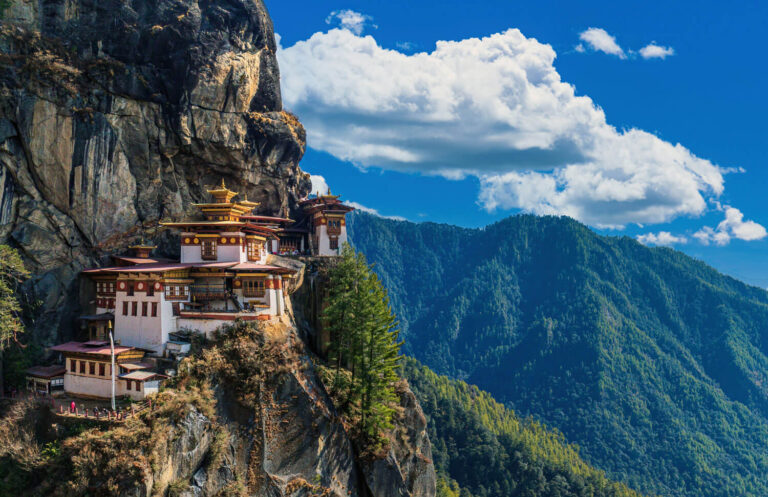
September clears through the month, and by the last week it is a good month rather than a shoulder one. October gives the clearest air of the year, the sharpest Himalayan views from the passes, comfortable walking temperatures and dry trails, which matters more than people expect on the climb to Tiger’s Nest. November is colder, still clear, and quieter.
Two November specifics. The black-necked cranes arrive in the Phobjikha valley from late October and stay through the winter. And the crane festival at Gangtey Goenpa is held on 11 November, which is one of the very few dates in the Bhutanese calendar that does not move.
Autumn is also when the good hotels fill. Six to nine months ahead is not early for October dates, and it is not early at all for a festival week.
Winter, December to February
Underrated for a specific kind of traveller, and wrong for most.
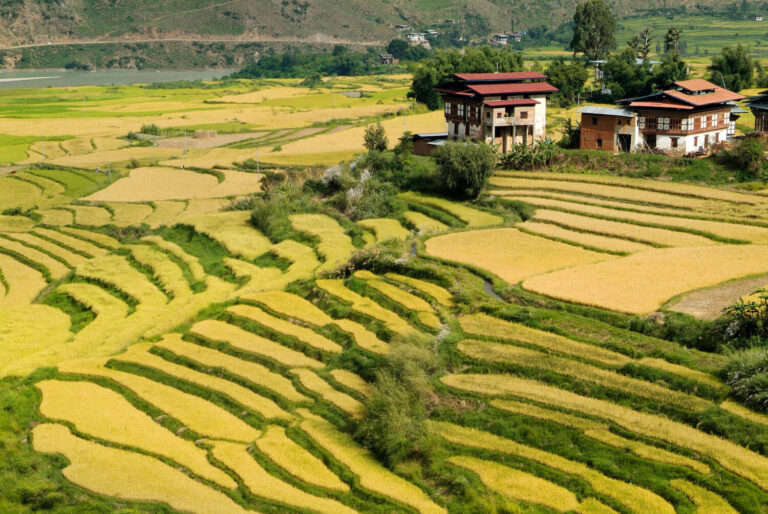
The air is at its clearest of the year and the mountain views from Dochula on a January morning are the best you will get. The western valleys are cold but dry. Punakha at about 4,300 feet (1,310 m) is genuinely pleasant in the afternoon. Rates are lower everywhere and the country is empty.
Against that: the passes can close briefly with snow, and the central valleys are properly cold. Bumthang in January, at about 8,500 feet (2,600 m) with unreliable heating in the middle of the hotel market, is not a comfortable place to be. Trekking is over. If you are coming in winter, we build a western route and keep you low at night.
The festival calendar, and why the dates move
Bhutan’s tshechus are religious festivals held in dzong courtyards, built around masked dances that tell stories the audience already knows. They are the best reason to time a trip precisely, and they are the hardest thing in Bhutan to plan around.
The reason is the calendar. Tshechu dates are set by the Bhutanese lunar calendar, not the Gregorian one, and they are confirmed relatively late. A festival that fell in early April one year can fall in late March the next. This is not disorganisation, it is a different calendar doing what it has always done, and it has a practical consequence you need to understand.
Hotels in the festival valley sell out before the dates are official. That is the whole problem in one sentence. The good rooms in Paro or Thimphu for a tshechu week are taken by operators holding space speculatively, months before anyone can confirm the exact days.
Our approach is to hold accommodation early against a best estimate and adjust as the dates firm up. It is the only method that works reliably, and it is why we ask festival clients to commit earlier than other clients.
The ones worth planning around:
- Paro Tshechu, March or April. The most visited, in the finest setting, and the most crowded. The giant thongdrel is unfurled at dawn on the final day.
- Thimphu Tshechu, late September or October. The largest, in the capital, and the easiest to combine with an autumn route.
- Punakha Drubchen and Tshechu, February or March. Includes a re-enactment of a seventeenth century battle and is less visited than Paro.
- Jambay Lhakhang Drup, Bumthang, October or November. The strangest and least visited of the major ones, including a fire ceremony and a naked dance after midnight.
- Gangtey crane festival, 11 November, fixed. Small, charming, and a good excuse to be in Phobjikha when the birds are there.
Our festival itinerary is built around this problem rather than around a fixed set of days.
What we would actually book
- First visit, mountains matter: the second half of October. Classic Bhutan in 8 days fits this window exactly.
- First visit, flowers and festivals matter: late March into April, accepting the haze.
- Quiet and clear, and you do not mind cold: late November or December.
- You want the cranes: November.
- You have only July or August: a shorter western route, low nights, and honest expectations. Or Bhutan another year.
Plan this trip
Tell us your dates and the places you want to see, and we build your trip as a $39 day-by-day plan, with recommended hotels by level and every transfer set out step by step.
Keep reading
- Bhutan: the complete guide to planning your trip
- What does a trip to Bhutan really cost?
- The climb to Tiger’s Nest, honestly described
- How many days do you need in Bhutan?
- Culture and festivals in 11 days
- All our Bhutan trips