1. The English gap is real, and it is fifty miles wide
Central Seoul is easy. Signage, transport, museums and a great many restaurants operate comfortably in English, and younger staff in the busy districts will often switch to it without being asked.
Move about fifty miles (80 kilometres) out and it thins fast. In Gyeongju, in the residential parts of Busan, on intercity buses and on Jeju outside the resort strip, do not assume an English menu, an English speaker at the guesthouse desk or English announcements at the bus terminal.
None of this makes Korea hard. It makes it a country where the quality of your document matters more than usual. Ours carry the Korean name of every place you are going, addresses in Hangul to show a driver, the platform and terminal names in both scripts, and an offline translation app set up before you land. That plus a guide on the two or three days where it changes what you understand solves essentially all of it.
Learning to read Hangul is worth the two hours it takes. It is a phonetic alphabet designed in the fifteenth century to be learnable quickly, and once you can sound out a sign you will discover how many of them are loanwords.
2. Google Maps will let you down, and it is not your fault
Korean mapping data cannot be exported, so Google Maps gives poor driving navigation inside the country and patchy walking directions. This surprises people mid-trip, usually at a bus stop.
Naver Map and KakaoMap are what actually work. Both have English interfaces, both do public transport well, and both should be installed before you arrive rather than while standing in the rain. We put this in the pre-departure document because discovering it on day two is a wasted morning.
3. Taxis are cheap and the apps are the problem
Taxis are plentiful and inexpensive, a cross-town Seoul fare being roughly $6 to $12. The catch is that the ride-hailing apps Koreans use generally require a Korean phone number to verify, which most visitors do not have. So you hail on the street or ask your hotel to call, and drivers rarely speak English.
The written Hangul address solves this completely, which is why we put one for every hotel, restaurant and station in the document. It sounds like a small thing and it is not.
4. Ten days is the trip, not a compromise
Almost every first-time enquiry arrives asking for fourteen days. Korea is small, about 38,700 square miles (roughly 100,000 square kilometres), with a high-speed line the length of it. Seoul to Busan is around 200 miles (325 km) in two and a half hours.
Seoul, Gyeongju and Busan, with a DMZ day and time that is not scheduled, is a complete first visit in ten days. The full argument is in South Korea in ten days, and it is the single piece of advice that changes the most first trips.
5. The DMZ is worth doing once, and it is not what the photographs suggest
This is the item I spend most time managing expectations on.
A DMZ day is a coach, a fixed route, timed stops at Imjingak, the Third Infiltration Tunnel and an observatory, a scripted commentary and a gift shop. It is not a walk along a fence line and you will not be alone. Passport checks are real, the itinerary is set by the military and it can be curtailed at short notice.
Joint Security Area access, which is the part with the blue huts and the soldiers facing each other, is a separate arrangement that has been suspended and restored more than once. We confirm its status at the time rather than promising it, and if it is closed we say so rather than substituting quietly.
Why do it anyway? Because it is the clearest way to understand a border that shapes everything else you will see in the country, and because the commentary, scripted as it is, comes from a society that lives with it. One day, early in the trip, and then the rest of Korea reads differently.
6. Eating is shared, and solo diners struggle
Korean meals arrive as a table rather than as plates. The main dish is shared, banchan side dishes come without charge and are refilled, and a great many dishes are cooked for two people minimum. Barbecue restaurants in particular will often not serve a single diner.
If you are two or more, this is entirely good news and the food is one of the best reasons to come. If you are travelling alone, plan around it: noodle shops, gimbap places, market stalls and the department store food halls all serve one person happily.
The other thing to know is that the best restaurants are usually single-dish specialists. One place does pork soup, another does cold noodles, another does short rib. Ordering broadly at one restaurant is normally the wrong move. What to order and where is covered properly in what to eat in South Korea.
Vegetarians should plan rather than improvise. Anchovy stock, fish sauce and shrimp paste are foundational, so vegetable-heavy menus are often not vegetarian. Korean temple cuisine is entirely plant-based and among the best food in the country, and we brief restaurants in Korean in advance.
7. The palaces need a plan, not a wander
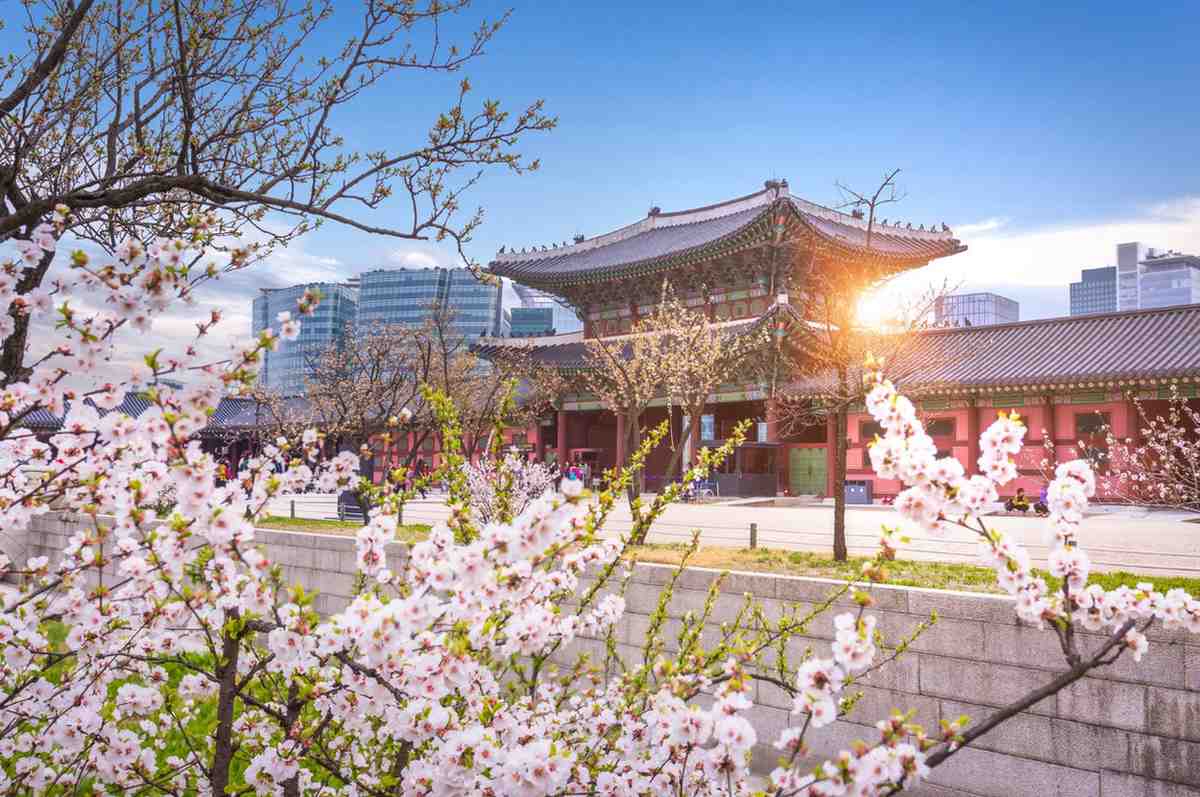
Seoul has five royal palaces and they are not interchangeable. Changdeokgung’s rear garden, the Huwon, is the finest thing among them and is visitable only on a timed guided ticket in limited numbers, released in advance and gone quickly for weekend slots.
Gyeongbokgung is the largest and the most photographed, and it is also where every tour group and every rented hanbok ends up by ten in the morning. Go at opening or go late.
More generally, Seoul rewards being planned by neighbourhood rather than by monument. The parts people remember afterwards are usually Seochon, Ikseon-dong, Euljiro and Seongsu rather than the palace they queued at. Seoul in four days sets out how we sequence it.
8. Entry rules change, so we confirm them rather than publish them
Most Western passports enter South Korea visa-free for a short tourist stay. Separately, Korea operates an online travel authorisation called the K-ETA, and has repeatedly granted temporary exemptions to a list of nationalities, extended those exemptions and adjusted the list. Anything published here as a hard rule would risk being wrong by the time you read it.
So we do it the other way round. Tell us the passport you are travelling on, we confirm the current requirement in writing before you book and send the correct link with your final documents. The same applies to the arrival declarations, which have also come and gone.
9. Who is actually looking after you
Worth stating plainly, because we would rather you knew than found out. GO EAST has dedicated local offices in Vietnam and India, our team in Japan, and local representatives in the Philippines. Korea is different: we work through a long-standing local partner in Seoul rather than people we employ. Your file is written here by me, the trip is delivered there by a company we have used for years and brief in detail, and your consultant stays on the same thread throughout.
That is a real distinction and it is why our Korea guides are chosen individually rather than assigned.
What we would do differently on a first visit
Five things, all of which come from watching first trips go slightly wrong.
Give Seoul four nights, not three. The most common regret. Three nights leaves you doing the palaces and the markets and nothing else.
Take the DMZ day early. It changes how the war memorial, the borders on every map and half the conversations read.
Book two or three guided days and no more. Seoul for context, a market and food day, and Gyeongju. Independent for the rest.
Sleep in a hanok once. Gyeongju or Jeonju. Heated floor, timber, a courtyard, sometimes a shared bathroom. It is the night people describe afterwards.
Do not add Jeju to a ten-day first trip as a box. Two flights for a mild resort experience. Add it for the Olle walking trails or for three days of doing nothing, which is a different and legitimate trip. The rest is in what we would skip.
Plan this trip
Tell us your dates and the places you want to see, and we build your trip as a $39 day-by-day plan, with recommended hotels by level and every transfer set out step by step.
Keep reading
- South Korea: the complete guide to planning your trip
- South Korea in ten days, and why that is enough
- What to eat in South Korea, and where
- Seoul in four days, neighbourhood by neighbourhood
- Classic Korea in 10 days
- Food and culture in Korea, 12 days