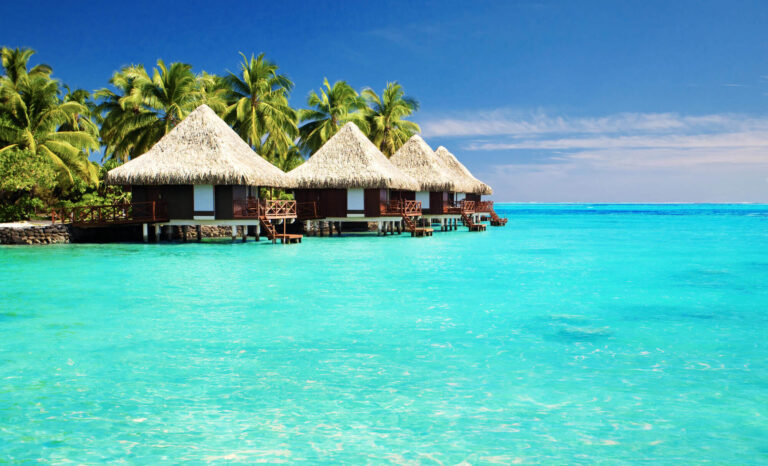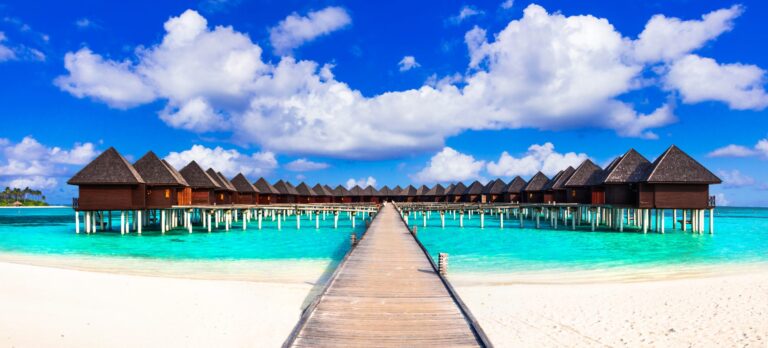
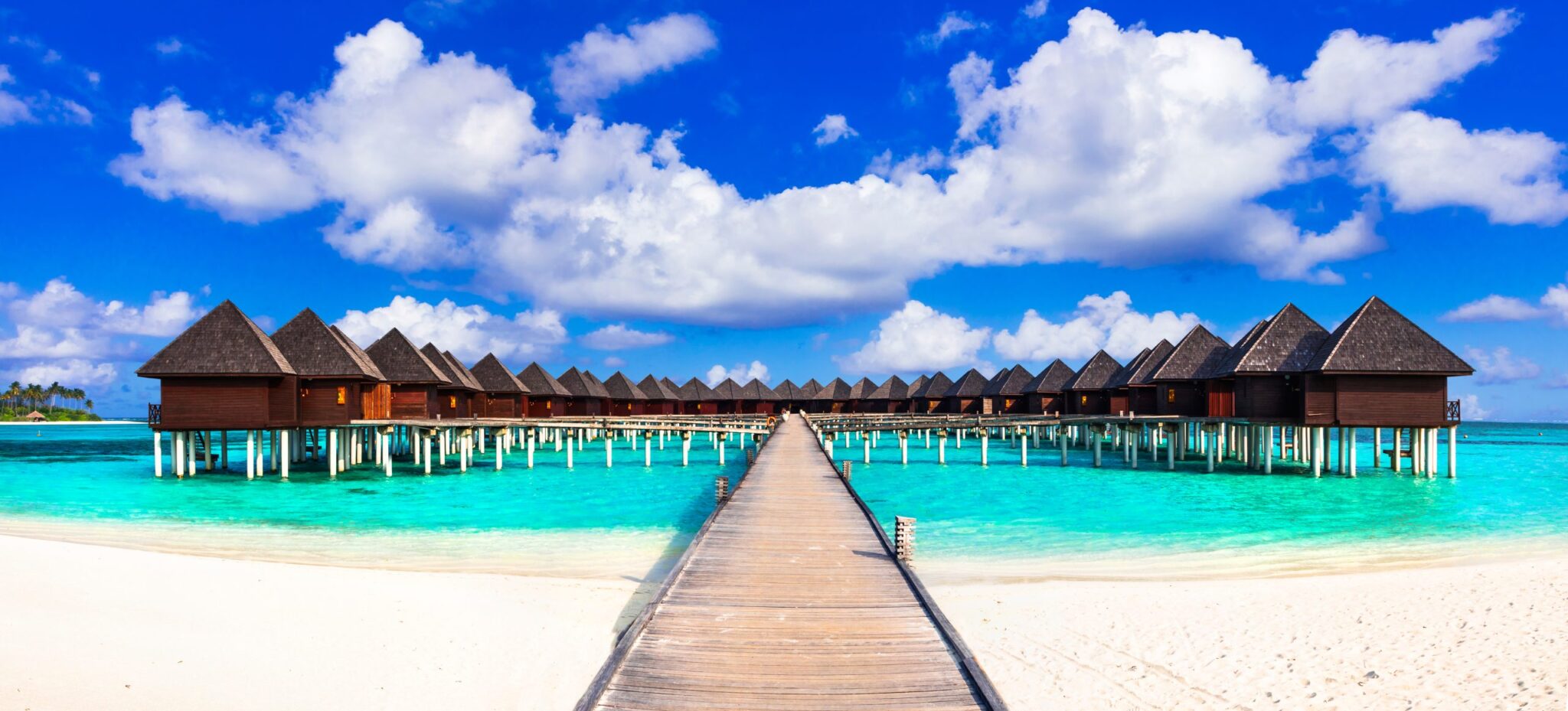
A Maldivian resort occupies its own island. Not a stretch of coast with neighbours, not a compound you can walk out of. The island is the resort and the resort is the island. There is no other restaurant, no other beach, no walk into town, no changing your mind on Tuesday. Whatever that island has is what your week has.
So choosing the island is not the first of several decisions. It is the decision, and it is the entire holiday. Get it right and the week is one of the best you will have. Get it wrong and there is nowhere to go.
Here is how we choose.
The five questions that decide it
1. How good is the house reef, really?
This is the single largest source of disappointment in the Maldives and it is almost never visible in the photographs.
A house reef is living coral close enough to the shore that you can walk into the water with a mask and be over it in a minute. Where it is good, it is among the best casual snorkelling in the world and you will do it three or four times a day without organising anything. Where it is not good, you are looking at white sand and a few fish, and every snorkel becomes a boat trip you have to book and pay for.
Some islands sit inside a ring of healthy coral with a drop-off you can reach by swimming. Others sit on a wide sand shelf where the reef edge is four hundred yards out, or has died back, or is only reachable through a single channel at certain tides. From a drone at 200 feet (60 m), those two islands look identical. The lagoon is the same turquoise in both photographs.
We describe the house reef in writing on every island we propose, including when it is poor, because on an island with nothing else to do a mediocre reef is the most expensive disappointment in the country. If snorkelling matters to you at all, this question alone usually reduces a shortlist from twenty islands to five.
2. How far is the transfer, and how does it get there?
Speedboat, domestic flight plus speedboat, or seaplane. This is a cost, a time cost, and a constraint on your international flight, and it is covered in detail in the complete Maldives guide.
The short version for a first trip: the seaplane is a genuinely good flight and a genuinely large per-person number, and it does not fly after dark. If a speedboat island gives you the reef and the room you want, take it and spend the difference on the room. If it does not, the seaplane is worth it and we plan the arrival day around it.
3. How big is the island?
Size varies from something you can walk around in twelve minutes to somewhere that hands you a bicycle.
| Island size | What it feels like | Suits |
|---|---|---|
| Small, under 15 minutes to walk around | Intimate, quiet, everyone recognises everyone by day three, can feel confining after six nights | Couples, boutique stays, short trips |
| Medium, 20 to 40 minutes | The common compromise. Two or three restaurants, room to find a quiet beach | Most first trips |
| Large, bicycles or buggies | More restaurants, more facilities, more people, less silence | Families, longer stays, anyone who wants choice |
There is no better or worse here. There is only knowing which you booked.
4. Board basis, which is a bigger number than you think
On an island with no alternative restaurant, the meal plan is not a small line item.
- Bed and breakfast looks cheapest and usually is not. Lunch, dinner and drinks at resort prices routinely add $120 to $250 per person per day.
- Half board is what we quote as standard: breakfast and dinner, with lunch and drinks paid for.
- Full board adds lunch and generally saves money on a seven night stay.
- All inclusive varies enormously in what it includes. On some islands it covers everything including diving and excursions. On others it covers a limited drinks list and the à la carte restaurants sit outside it, which is the version that generates complaints.
We show you the comparison in numbers rather than telling you which to choose. Room-only rates that look competitive on a booking site stop looking competitive on day three.
5. Who else is on the island?
Some islands are almost entirely honeymooners and are quiet by design. Some are built around a kids club with noise at the main pool from nine in the morning. Some are adults-only, which is a formal policy rather than an atmosphere. Some cater principally to one national market, and the food, the music and the pace of the place follow.
None of these is good or bad. It is only bad when nobody told you, and this is the most common cause of an unhappy week that had nothing to do with the weather. A couple on a honeymoon booked onto a busy family island have not had bad luck, they have had bad advice. See romantic Maldives in 8 days and the Maldives with children in 8 days for the two ends of that.
The overwater villa question
The most-photographed room in the country is worth the supplement roughly half the time.
What you are buying is deep clear water directly beneath you, privacy, and a ladder into the sea from your own deck. On an island where the villa sits over a deep lagoon, faces open ocean and gives you reef access by swimming, it is one of the best hotel rooms in the world.
On an island where the overwater row sits over shallow sand, faces a public walkway and looks at the back of the next villa, you have paid a large supplement for a view of a walkway. The rate is the same. The photographs are the same. Only the position differs, and position is not something a booking site describes.
Two practical points nobody mentions. Overwater villas are hotter and less well shaded than beach villas, and the walk from the far end of the jetty to the restaurant in the middle of the day is longer than it looks. And they are not the right room for small children, for reasons covered in the Maldives with children.
Our general answer for a first trip: a good beach villa with direct reef access, and one or two nights overwater at the end if the island’s overwater villas are genuinely well placed.
What surprises first-timers
The distances inside the country. The Maldives runs about 540 miles (870 km) north to south. Two resorts in the same country can be four hours apart. Island-hopping in the way you would in Greece or Thailand is not a thing here.
How little there is to do, and how much that turns out to matter. This is the whole point and it still surprises people. There is no town, no market, no walk, no day trip that is not a boat. If your idea of a holiday involves finding somewhere new for dinner, this is not that holiday, and there is no version of it that is.
The sun. The reflection off white sand and shallow water is stronger than it feels, especially with a breeze. First-day burns are the most common medical event on a Maldivian island. A rash guard for snorkelling and reef-safe sunscreen are not optional.
The bill at the end. Service charge, tourism goods and services tax and a per-night green tax sit on top of the room rate, and everything on the island is charged to the room. It adds up quietly. We include all of it in what we quote.
How good the snorkelling is on a good island, and how ordinary it is on a poor one. Same country, same week, completely different holiday. This is why we labour the house reef.
Malé itself. A dense, real, working capital city on a small island, with a fish market and the coral stone Old Friday Mosque. It is worth two hours if your flights leave a gap and it is not the reason anyone comes.
That there is a whole other country here. Inhabited Maldivian islands with guesthouses, local food and day boats cost a fraction of a resort and are a genuinely good trip. They are also conservative Muslim communities with different rules about alcohol and swimwear. See local islands versus resort islands.
What we tell every first-timer
Send us five things and we can narrow 160 resort islands to about six: your dates, your budget, whether snorkelling from the beach matters, how you feel about a long transfer, and whether you want quiet or things to do.
Then we compare those six properly, in writing, with the reefs described honestly, and we tell you which one we would book ourselves and why. We then build the shortlist into a $39 day-by-day plan, with the resort or guesthouse options by level and every transfer set out step by step. See classic Maldives in 7 days for the shape it usually takes, or boutique Maldives in 7 days if the room matters more than the acreage.
Related
- The Maldives: the complete guide to planning your trip
- How many days do you need in the Maldives?
- What a trip to the Maldives costs
- What we would skip in the Maldives
- All our Maldives trips