The real thing is Newari, the cuisine of the Kathmandu valley, and it is one of the more interesting food cultures in the Himalaya. There is also Thakali food from the Annapurna region, which is the best thing on any trekking route, and Tharu cooking in the lowlands. This article is about finding those, plus an honest account of what you will actually eat on a trek.
The three foods everybody meets
Dal bhat, which is not a dish but a system
Lentil soup, rice, a vegetable curry, a pickle, sometimes a meat curry, sometimes spinach or fermented greens, arriving on a compartmented steel plate. The critical fact is that it comes with refills, all of them, indefinitely, at no extra cost.
This is what the guides and porters eat twice a day, and it is what you should eat on the trail. It is the freshest thing in any teahouse kitchen because it is the thing being cooked continuously, and it delivers more calories than anything else on the menu at a moment when your body wants them.
The Thakali version, from the Annapurna region, is the best dal bhat in the country: better balanced, more vegetables, a proper pickle. If you see Thakali on a sign in Pokhara or on the trail, go in.
Momo
Steamed or fried dumplings, filled with buffalo, chicken or vegetables, served with a tomato and sesame chutney. They are Tibetan in origin and completely naturalised, and Nepal eats them constantly.
Jhol momo, served in a thin spiced soup rather than dry, is the version worth seeking out. Kothey momo are pan-fried on one side. A plate costs $3 to $5.
Newari food, which is the one to make an effort for
The Newars are the indigenous people of the Kathmandu valley and their cooking is distinct from anything else in South Asia: buffalo-heavy, spiced with Sichuan pepper and fenugreek, and built around a set-piece feast rather than a plate of curry.
What to order:
- Chatamari, a rice-flour crepe topped with minced buffalo and egg, cooked to order.
- Bara, a thick lentil pancake, fried, sometimes with an egg cracked onto it.
- Choila, buffalo grilled over flame then tossed with mustard oil, chilli and Sichuan pepper. Sharp, smoky, and the best thing in Newari cooking.
- Yomari, a steamed rice-flour parcel filled with molasses and sesame, eaten in winter.
- Kwati, a soup of nine sprouted beans, eaten at a specific festival and excellent at any time.
- Samay baji, the ceremonial platter: beaten rice, choila, black soybeans, ginger, egg, and a glass of the local rice spirit. This is the dish to order if you order one thing.
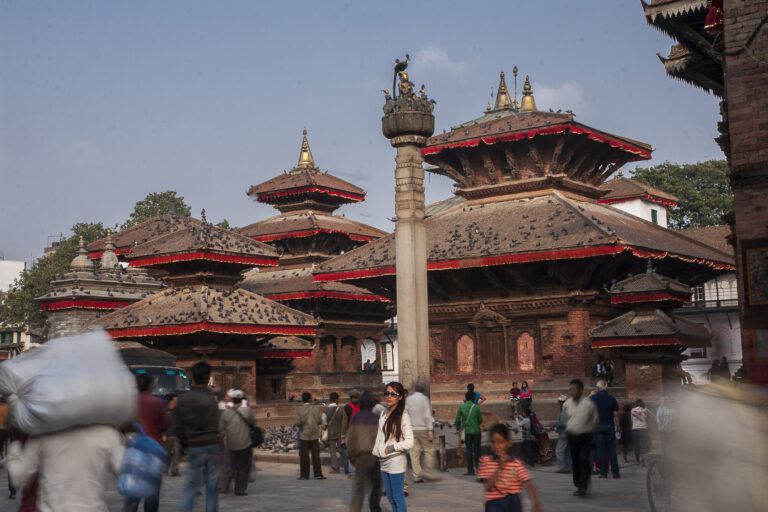
Where: Patan and Bhaktapur have the best of it, and there are several serious Newari restaurants in Kathmandu that do a tasting menu for $25 to $45. We build a Newari kitchen afternoon into the food and culture route, because being shown how choila is made is more useful than being served it.
What you will actually eat on a trek
The teahouse menu is standardised the entire length of a trail, and the reason is supply. Everything came up on a porter’s back or on a mule, so the menu reflects what travels.
Order: dal bhat, always. Fried rice, noodle soup, potatoes in every form, eggs, Tibetan bread, porridge, garlic soup, which locals swear helps with altitude and which is at minimum a hot salty broth when you need one.
Do not order: pizza, lasagne, apple pie, yak steak or anything else the menu offers to prove it can. They are made from ingredients that have been carried a long way, in a kitchen with one stove and a cook working on a two-burner gas ring, and they are the most likely thing on the menu to make you ill.
Above about 11,500 feet (3,500 m), skip meat entirely. It has walked up the same hill you did without refrigeration. Nobody who has seen the meat arrive at a high lodge orders it twice.
Two practical things. Drink far more than you want to, because you dehydrate fast at altitude and dehydration mimics the early symptoms of altitude sickness, which is discussed properly in Nepal for the first time. And do not buy bottled water on the trail: we provide purification and every lodge sells boiled or filtered water, which is covered in what a trip to Nepal costs.
Where to eat, by place
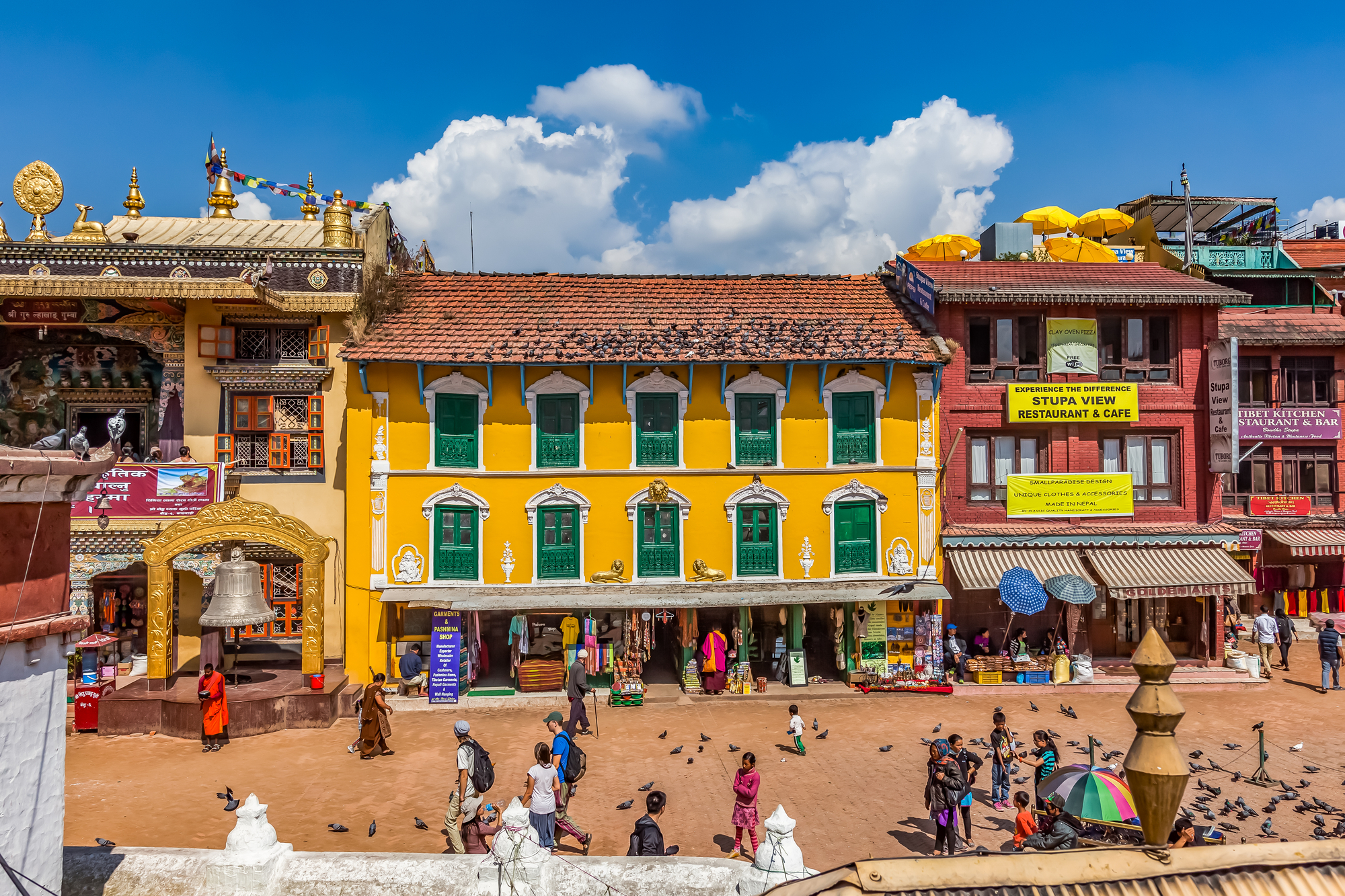
Kathmandu. The serious Newari restaurants, several of which sit in restored courtyards and are worth the evening on the building alone. Also the Tibetan and Sherpa restaurants around Boudhanath, which serve thukpa, thenthuk and butter tea to a community that eats them daily rather than to visitors.
Patan. Our preferred base in the valley, and the best small restaurants. A courtyard lunch in Patan after a morning in the Patan Museum is one of the good afternoons in Nepal.
Bhaktapur. Juju dhau, the king of yoghurts, a set buffalo-milk yoghurt served in a clay pot, made in Bhaktapur and better there than anywhere else. Have it in Potters’ Square.
Pokhara. Lakeside is largely a visitor strip and the food is unambitious. The Thakali restaurants a street back from the water are where to go.
Chitwan and the Terai. Tharu food: river fish, smoked or dried, wild greens, and a chilli heat that the hills do not have. Lodges will arrange a village meal, and it is more interesting than the lodge buffet.
Drinks
Tea. Chiya, black tea boiled with milk, sugar and often cardamom and ginger, is drunk constantly. Butter tea, in the Tibetan and Sherpa areas, is salty and made with churned butter, and is genuinely useful in the cold even if the first sip is a surprise.
Alcohol. Raksi is a clear spirit distilled from millet or rice, served warm, and it varies from good to alarming. Chhaang is a cloudy fermented millet beer. Both are worth trying in the valley and both are worth avoiding at altitude, where alcohol makes acclimatisation measurably harder. Our guides will say so.
Coffee. Nepal grows some, mostly in the hills west of Kathmandu, and there are a handful of genuinely good places in Patan and Pokhara.
What we think is overrated
The Thamel restaurant strip. Multi-cuisine menus running to twelve pages, live music, and food that is nobody’s tradition. It exists because backpackers wanted it in 1975 and nothing has changed. Walk twenty minutes to Patan instead.
Everest beer as a souvenir. It is a perfectly fine lager.
The yak steak. Usually buffalo, always tough, and carried a long way.
“Authentic Nepali cultural dinner shows.” Fixed menu, masked dancing, coach parties. The dancing is a real tradition and this is not the setting for it. If you want the Newari food, book the restaurant. If you want the dance, we will find a real occasion.
Bottled water. In the valley it is cheap and fine. On the trail it costs three or four dollars at height and the empties do not come down.
Eating with restrictions
Vegetarian. Nepal is the easiest country in our library for this. Dal bhat is vegetarian by default, most Newari dishes have a vegetable version, momo come with vegetable fillings everywhere, and a large part of the Hindu population eats vegetarian food on religious days anyway.
Vegan. Workable with attention, since ghee, curd and paneer are common. Say so at the outset and we brief the lodges and restaurants in Nepali.
Gluten. Rice-based food dominates, so this is manageable. Tibetan bread and momo wrappers are the obvious exclusions.
Stomach trouble. The single most useful rule is to eat what is being cooked constantly rather than what has been sitting. That means dal bhat rather than the twelfth item on a teahouse menu, and busy restaurants rather than empty ones. Our guides know which lodges on each route have the better kitchens and we route around the ones that do not.
Plan this trip
Tell us your dates and the places you want to see, and we build your trip as a $39 day-by-day plan, with recommended hotels by level and every transfer set out step by step.
Keep reading
- Food and culture in Nepal, 12 days
- The Kathmandu valley in four days
- Nepal for the first time
- Nepal: the complete guide
- Classic Nepal in 12 days
- All our Nepal trips