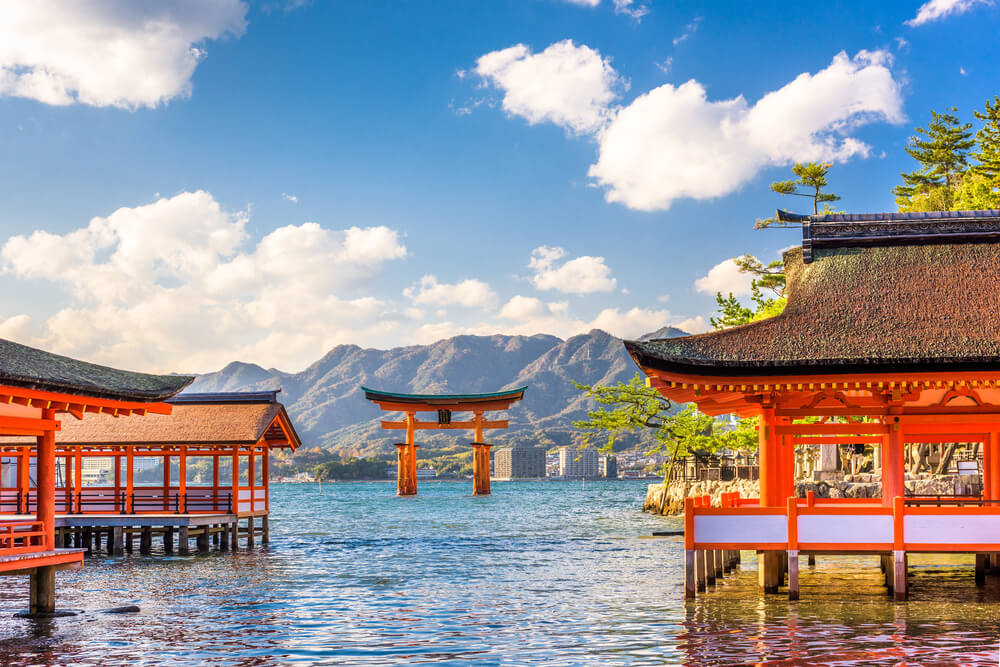
Hiroshima and Miyajima can be done as a day trip from Kyoto or Osaka, but they reward one night more than almost anywhere else on the classic Japan route. Hiroshima is about 1 hour 40 minutes from Kyoto by the fastest Shinkansen, the JR ferry to Miyajima crosses in about 10 minutes, and the island empties of day visitors in the late afternoon. Sleep on Miyajima or in Hiroshima and you see the Great Torii at both high and low tide, lit after dark, and the Peace Memorial Museum before the school groups arrive.
Updated: November 2026 · May Ast, Japan specialist, Go East Travel
Who this is for: first-time visitors to Japan on a 12 to 16 day trip who are deciding whether Hiroshima earns a place in the route, and how many nights to give it. If you are still choosing between bases further east, read Kyoto or Osaka: where to stay first.
Is Hiroshima worth it on a first trip to Japan?
Yes, for most travellers, and for a reason that has little to do with sightseeing. The Peace Memorial Park and Museum are among the most affecting places on a first trip to Japan, and the travellers we plan for who skip them often say afterwards that they wish they had not. Add Miyajima, one of the three classic views of Japan, and Hiroshima’s own food (okonomiyaki layered with noodles, and oysters from the bay in the cold months), and the city holds a full day without effort.
The case against is purely about time. On a trip of ten days or fewer, built around Tokyo and Kyoto, Hiroshima costs you most of a day in transit. From 12 days up it fits naturally, usually between Kyoto and the flight home from Osaka (Kansai) or onward to Fukuoka. It is the westernmost stop on our Classic Japan in 14 days route for exactly that reason.
How do you get to Hiroshima and Miyajima?
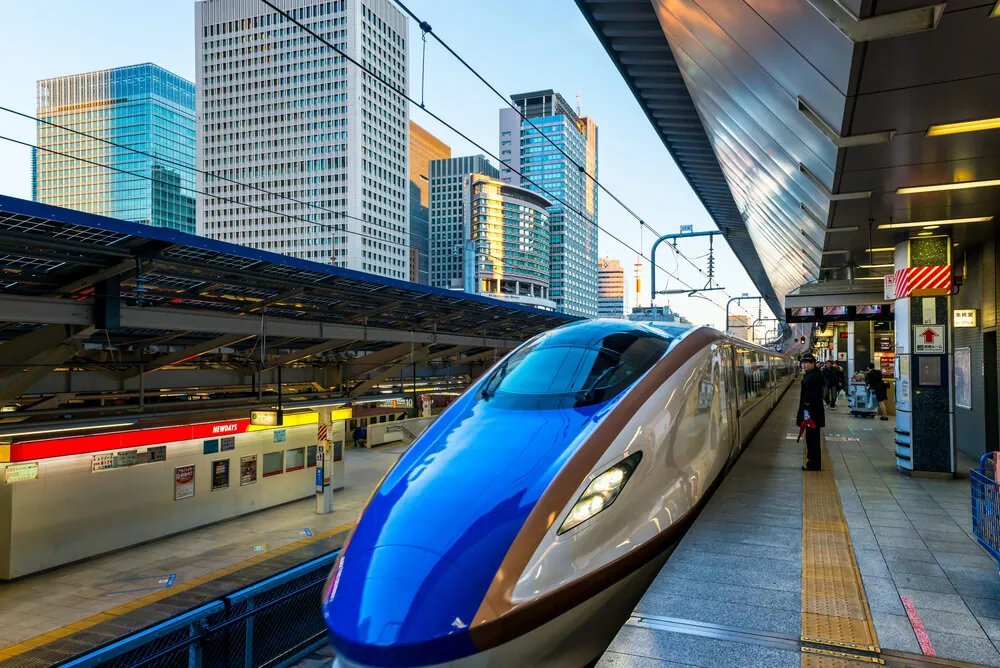
Hiroshima sits on the Sanyo Shinkansen. Typical fastest journey times on the Nozomi:
| From | Fastest train to Hiroshima | Notes |
|---|---|---|
| Shin-Osaka | about 1 hr 25 min | The shortest hop, and the usual base for a day trip |
| Kyoto | about 1 hr 40 min | Direct, no change at Shin-Osaka needed on most Nozomi |
| Tokyo | about 4 hr | Possible in a day, but not worth it as a round trip |
| Hakata (Fukuoka) | about 1 hr 5 min | Useful if you continue west to Kyushu |
One detail catches rail-pass holders out. The Japan Rail Pass covers the Hikari and Sakura trains on this line, which are only a little slower. The Nozomi and Mizuho need an extra special ticket on top of the pass. If you hold a pass, the Hikari or Sakura is usually the better choice. If you are buying single tickets, take the Nozomi. Whether the pass pays off at all depends on the rest of your route; we explain the arithmetic in Is the Japan Rail Pass still worth it?
For Miyajima, take the JR Sanyo line from Hiroshima station to Miyajimaguchi (about 25 to 30 minutes), then walk to the pier for the ferry. Two companies cross; the JR West Miyajima Ferry accepts the Japan Rail Pass and the JR-West passes. Both its regular and “Great Torii” sailings take about 10 minutes, and the Great Torii sailings, which pass closest to the gate, leave Miyajimaguchi between 9:10 am and 4:10 pm (JR West Miyajima Ferry, checked November 2026). Sit on the right-hand side facing forward for the view.
A separate Miyajima Visitor Tax of 100 yen per person is charged when you enter the island; preschool children are exempt. It is not included in the rail pass, so buy it at the machine on the pier.
Day trip or overnight: which should you choose?
Choose the day trip if Hiroshima is a box to tick on a tight route; choose the night if you want to see Miyajima the way the photographs promise. The difference comes down to three things.
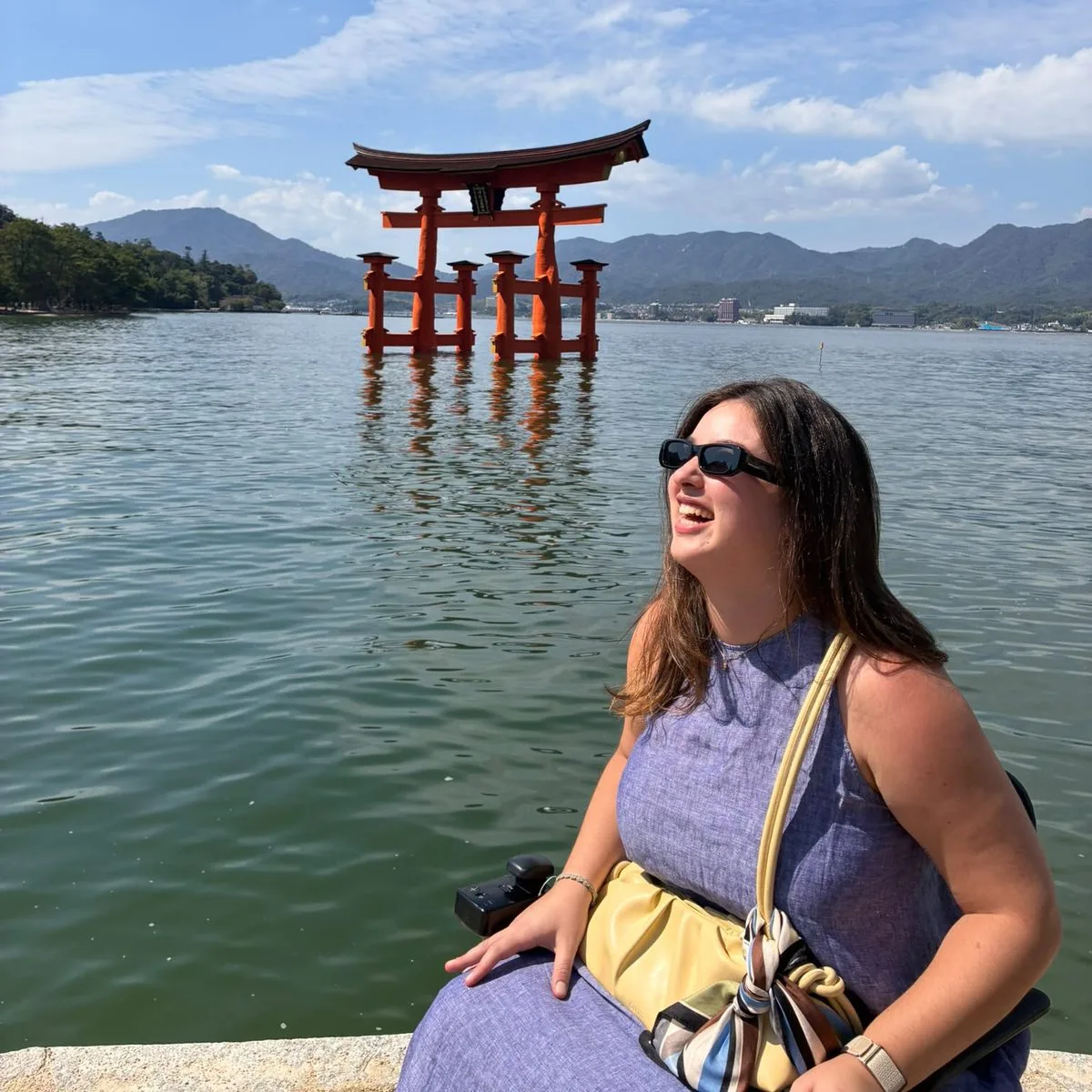
- The tide. The Great Torii stands in the sea at high tide. At low tide you can walk out to its base across the sand. A day trip gives you one or the other; staying the night gives you both, and you can plan the walk-out around the published tide table rather than luck.
- The crowds. Most day visitors are on the ferry back by late afternoon. The shopping street and the shrine approach are quiet at dusk, and the deer outnumber the people.
- The evening. The torii and the shrine are lit after sunset, and the view across the water from the shore is the best image of the island. Day-trippers rarely see it, because by then they are on a train to Osaka.
The cost of the night is one more hotel change. We usually solve that by sending main luggage ahead by courier from Kyoto to the next hotel after Hiroshima, so you arrive with a small overnight bag. It is one of the small logistics that makes a 14-day route feel slower than it is.
What does a good Hiroshima and Miyajima plan look like?
This is the shape we use most often for one night. It assumes you arrive from Kyoto in the morning.
- Late morning: Shinkansen from Kyoto. Leave luggage at a Hiroshima station locker or send it ahead.
- Midday: the Atomic Bomb Dome and Peace Memorial Park, then the Peace Memorial Museum. Give the museum at least 90 minutes; it is not a place to hurry. The park itself is free and open at all hours.
- Late afternoon: train and ferry to Miyajima. Check in, then walk the shore to the torii as the day crowds leave.
- Evening: dinner at the ryokan, then the lit torii and shrine from the shore. If you have never stayed in a ryokan, read our ryokan etiquette guide first.
- Next morning: Itsukushima Shrine when it opens, before the first ferries arrive, and the low-tide walk if the timing works. Then the ropeway up Mount Misen for the view over the Seto Inland Sea, or the walk through Momijidani park if the weather closes in.
- Early afternoon: ferry back and onward by Shinkansen to Osaka, Okayama or Fukuoka.
On a day trip, keep the same order but cut the Miyajima half to the shrine and the shore, and be honest that Mount Misen will not fit.
Where should you stay: Miyajima or Hiroshima city?
Miyajima if the evening and the tide are the point; Hiroshima if you want choice, a lower price and the city’s food. The island has a small number of ryokan, most of them with dinner included and many in the traditional style, and they fill early in the autumn colour season and around the spring holidays. Hiroshima has the full range of business, international and design hotels within a tram ride of the Peace Park, and you can still see the lit torii if you take an early-evening ferry and come back by the last JR sailings.
For travellers with mobility needs, Hiroshima city is usually the easier base. The ferries and the island’s main paths are manageable, but the ryokan often have steps and Japanese-style rooms. Our accessible Japan page explains how we check this in advance.
What are the mistakes to avoid?
- Going to Miyajima first, the museum second. The museum needs your full attention, and it is harder to give after a long morning on the island. Do it first.
- Booking the Nozomi on a rail pass without the extra ticket. Take the Hikari or Sakura, or budget for the supplement.
- Ignoring the tide. If walking out to the torii matters to you, check the tide table before you fix the day. It shifts by roughly 50 minutes a day.
- Feeding the deer. Unlike Nara, Miyajima asks visitors not to feed them at all. Keep paper maps and snacks in a bag.
- Treating it as a half-day. Even the day trip is a full day. Do not add Himeji or Okayama to the same day unless you are prepared to rush both.
When is the best time to visit Hiroshima and Miyajima?
Late March to early April for cherry blossom, and November for the autumn colour in Momijidani, whose name means “maple valley”. Both are busy; on the island they are very busy. Winter is quieter and is the season for Hiroshima oysters. June and July bring the rainy season, and late summer is hot and humid, with typhoon risk from August into October. For the wider picture across the country, see Japan month by month.
Sources: JR West Miyajima Ferry (crossing times, the Great Torii sailings, rail-pass acceptance and the visitor tax), checked November 2026. Shrine and museum hours change with the season; check jr-miyajimaferry.co.jp, itsukushimajinja.jp and hpmmuseum.jp before you go.
Plan this trip
Tell us your dates and how many nights you can give western Japan, and we plan your trip with you day by day, free of charge: the route, recommended hotels by level, the trains and the ferry timed to the tide, all in your trip app. Then, if you want, we quote the ground services and you choose what to take.
More on Japan: private, tailor-made trips to Japan · Japan for the first time · How many days you need in Japan